
Hernia mesh is one of the most varied product categories a surgical supply buyer manages. The types of hernia mesh differ by material, whether they are coated for placement inside the abdomen, their shape and how they are fixed in place. This guide sorts the most common products into clear groups so you can match reference numbers to the right category when ordering.
How hernia mesh is categorized
Buyers and surgeons usually describe mesh along a few dimensions:
- Material: most permanent meshes are polypropylene or polyester; some products are absorbable or biosynthetic.
- Coating: composite meshes add a barrier layer on one side for placement where the mesh may contact abdominal organs.
- Shape: flat sheets, pre-shaped anatomical meshes and round or oval patches.
- Fixation: some meshes are held with sutures or tacks, while others are self-gripping.
Common types of hernia mesh
Flat permanent mesh
Flat polypropylene or polyester sheets are the traditional option and can often be cut to size. Ethicon’s Prolene Hernia System and Covidien’s Parietex meshes are familiar examples in this group.
Coated composite mesh and patches
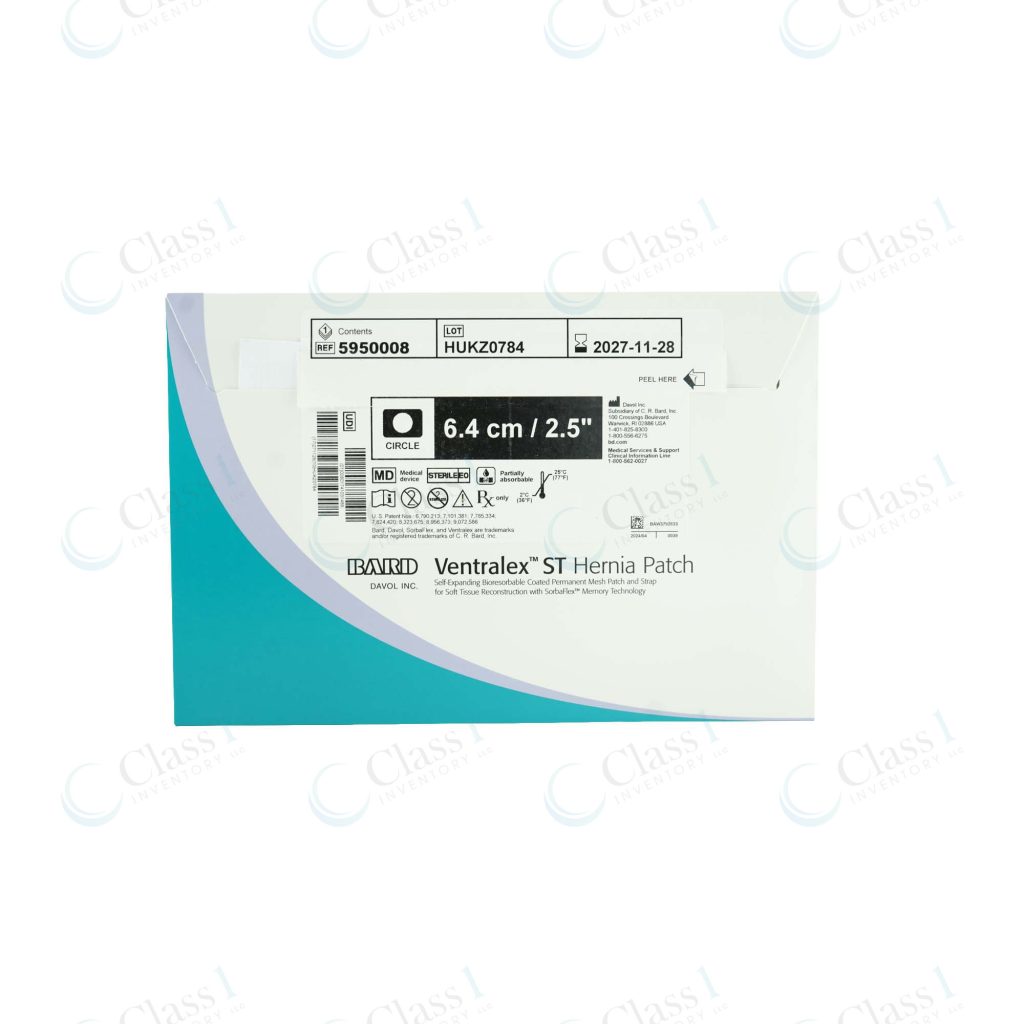
Composite meshes combine a permanent mesh with an absorbable barrier coating. Bard’s ST line, including Ventralex ST and Ventrio ST hernia patches and Ventralight ST mesh, and Covidien’s Symbotex and Parietex Composite products are widely used examples. Patches like Ventralex ST come in small sizes, such as 4.3cm and 6.4cm circles, and often include positioning straps.
Anatomical (3D) mesh
Pre-shaped meshes are contoured to fit the inguinal anatomy and are usually ordered as left or right versions. Bard’s 3DMax and 3DMax Light meshes and Medtronic’s Dextile anatomical mesh are common examples, so check the side (left or right) and size on every reference number.
Self-fixating mesh
Self-gripping meshes, such as Covidien ProGrip, have micro-grips that help hold the mesh in place and are also sold in left and right versions for laparoscopic use.
Absorbable and biosynthetic mesh
Some meshes are designed to be absorbed over time. Bard’s Phasix and Phasix ST meshes are biosynthetic options, and Ethicon’s Vicryl woven mesh is an absorbable mesh used in other applications. These products are labeled for specific uses, so confirm the indication with the product labeling.
Mesh fixation devices
Laparoscopic hernia repairs often use tack or strap fixation devices, such as Covidien AbsorbaTack and Ethicon SecureStrap, which come in different tack counts. Browse our hernia mesh fixation devices to see the options we carry.
What to check before ordering hernia mesh
- Side: anatomical and self-fixating meshes come in left and right versions, and the reference number usually indicates the side.
- Size and shape: confirm dimensions in centimeters or inches, and whether you need a circle, oval, rectangle or anatomical shape.
- Coating: make sure a composite mesh is used when your surgeons require one.
- Brand standardization: many facilities standardize on one or two mesh families to simplify inventory.
- Dating: check expiration dates on receipt and rotate stock.
Mesh selection for each patient is a clinical decision for the surgeon; always follow the manufacturer’s instructions for use.
Shop hernia mesh
Browse all hernia mesh and patches and the full hernia repair category, see Bard hernia products, or paste your mesh reference numbers into our SKU availability checker to see what is available.