
Sutures are among the highest-volume items in any operating room, and ordering the right one means matching material, size, length and needle. The first split every buyer learns is absorbable vs non-absorbable sutures. This guide explains that difference, lists the common materials and brands in each group and shows how to read suture reference numbers so reorders are accurate.
Absorbable vs non-absorbable sutures: the basics
Absorbable sutures are broken down by the body over time, so they typically do not need to be removed. Non-absorbable sutures are not broken down and either stay in place permanently or are removed after healing, as with many skin closures. Surgeons choose between them based on the tissue, how long support is needed and the procedure.
Common absorbable sutures
- Coated Vicryl (polyglactin 910): a braided absorbable suture widely used for soft tissue approximation.
- Vicryl Rapide: a faster-absorbing version of Vicryl, often used for skin and mucosa.
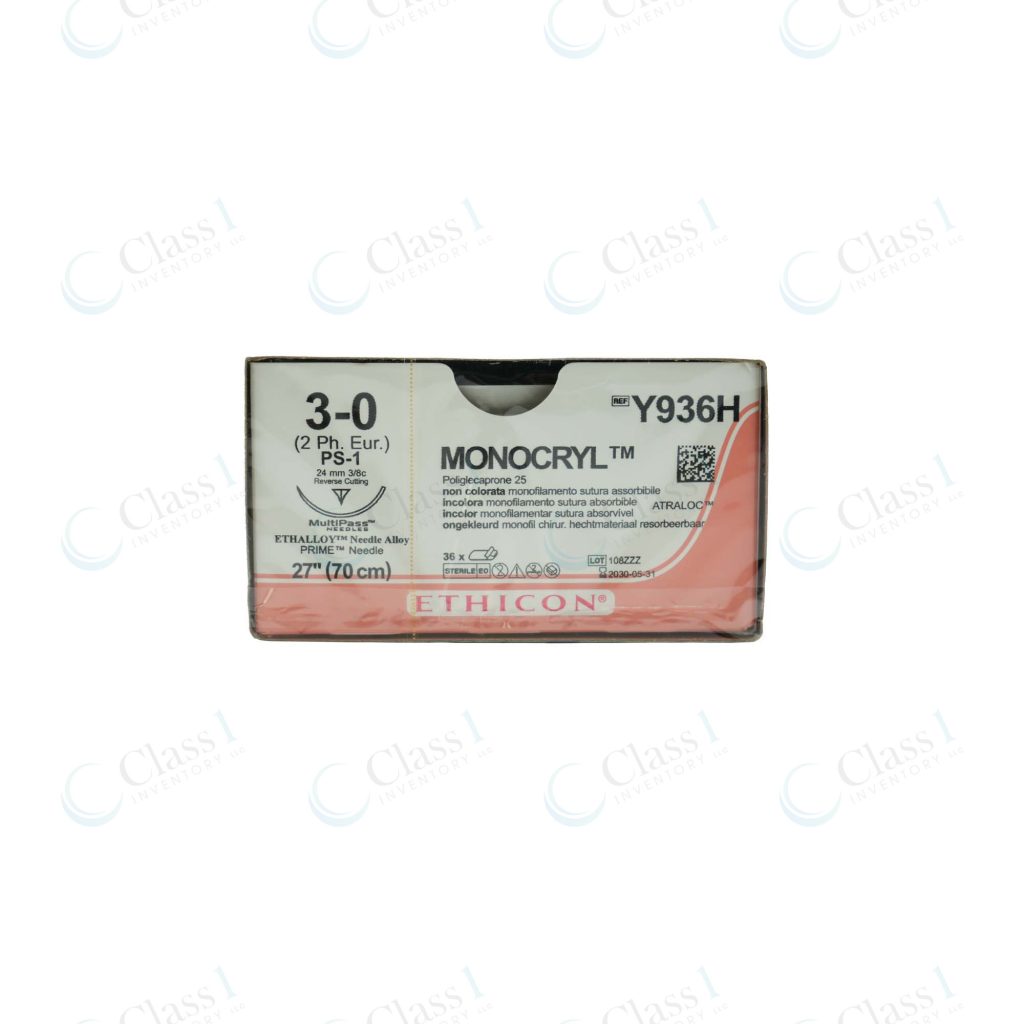
- Monocryl (poliglecaprone 25): a monofilament absorbable suture, commonly used for subcuticular skin closure.
- Monocryl Plus: Monocryl with an antibacterial coating.
- Stratafix Spiral: a barbed suture designed for knotless closure.
Browse our absorbable sutures and barbed sutures.
Common non-absorbable sutures
- Prolene (polypropylene): a monofilament non-absorbable suture used widely, including in vascular and hernia procedures.
- Ethilon (nylon): a monofilament often used for skin closure.
- Perma-Hand silk: a braided silk suture known for its handling.
- FiberWire and FiberTape (Arthrex): high-strength sutures and tapes used in orthopedic and sports medicine repairs.
Browse our non-absorbable sutures and sports medicine suture.
Monofilament vs braided
Alongside absorbable vs non-absorbable, sutures are either monofilament (a single strand, such as Monocryl and Prolene) or braided (multiple strands, such as Vicryl and silk). Monofilament sutures pass smoothly through tissue, while braided sutures are known for handling and knot security. Surgeons usually have strong preferences here, so match what is on your current preference cards.
How suture sizes work
Suture diameter uses the USP scale, where more zeros means a finer suture: 2-0 is thicker than 3-0, which is thicker than 4-0. Larger sizes, such as 0 and 1, are used where more strength is needed. Length is listed in inches or centimeters, commonly 18in or 27in.
Needle codes
Most sutures come swaged onto a needle, and the needle code describes its shape and point. For example, Ethicon PS-1 and PS-2 are reverse cutting needles often used for skin, SH is a taper needle used in soft tissue, and CT needles are used in general closure. The same suture material in the same size can come on many different needles, so the needle code is essential when reordering.
Reading Ethicon suture reference numbers
Ethicon reference numbers identify a specific combination of material, size, length and needle. For example:
- Y936H: Monocryl 3-0, 27in, PS-1 reverse cutting needle.
- J497H: Coated Vicryl 3-0, 18in, PS-2 needle.
- 8833H: Prolene 2-0 on an SH taper needle.
Because two sutures that look similar can differ only by needle or length, always reorder with the exact reference number from the box. Paste your full suture list into our SKU availability checker to see which items are available.
What to check before ordering sutures
- Material and brand: match the surgeon’s preference card exactly.
- Size, length and needle: confirm all three, since each changes the reference number.
- Box quantity: sutures are usually sold by the box, often 12 or 36 per box.
- Dating: check expiration dates and rotate stock.
Suture selection for each patient is a clinical decision; always follow the manufacturer’s instructions for use.
Shop sutures
Browse all sutures, closure and hemostasis products, including Dermabond skin adhesives and skin staplers, or contact our team for a quote on your full suture list.